
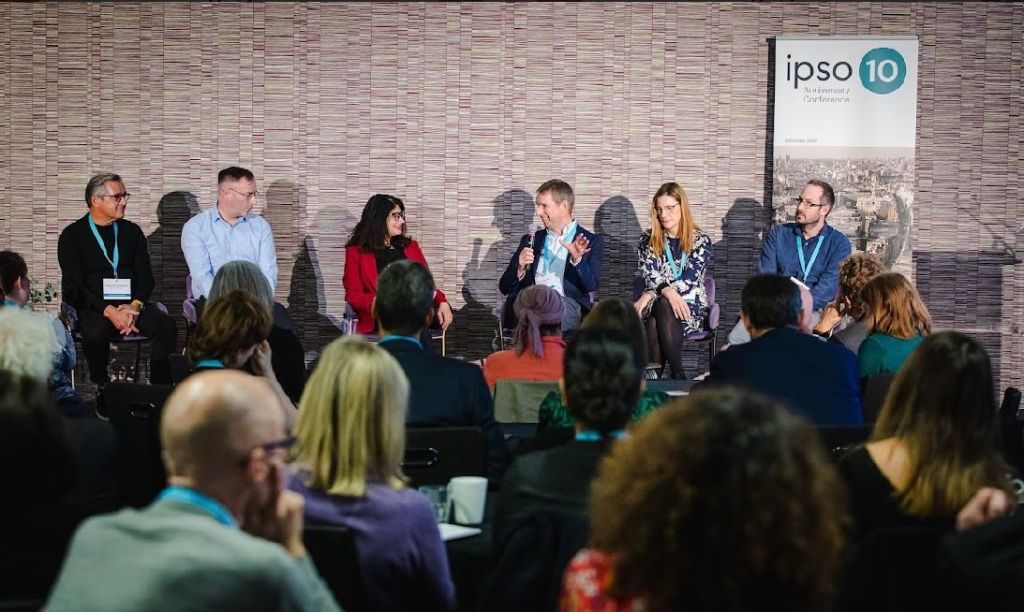
I was recently down in London to be part of a panel on how AI was likely to impact on community journalism and local journalism.
It’s impossible to have a conference without having at least some discussion of the role of the rise of Large Language Models (LLMs) as the likes of ChatGPT, Open AI, Gemini and others become more widely used and accessible.
We had a good discussion during the panel – at the IPSO (the press regulator) conference – and it struck me it’s not just journalism where it’s important. Any organisation creating digital content, and let’s face it that’s a very broad spectrum these days given the volume of publishing across social platforms that having a way to approach AI is crucial no matter what type of business you are.
So here’s my six thoughts on preparing for AI regardless of what content business you might be
1. Experimentation. Rather than stand back, dive in. Encourage your teams, or yourself, to open up one of the AI tools and have a play. It doesn’t need to be linked to the day-job either, let people play around with everyday tasks – like planning the food meals for the week or booking a holiday. They will soon then work out ways to make it assist the everyday tasks at work too. It takes away the fear factor and the hype factor too.
2. Discussion. Talk with your team about how AI *could* be used. What are the problems facing your business and teams right now? Are there things they have to do each week which could benefit from being AI-assisted because it means they can be done quicker – giving people time to do the things which add more value or they get more joy from doing?
3. Encourage and spotlight. There may be individuals within your teams who are very fluent in AI already and may be using it outside of work – or even within work already. Instead of being defensive, embrace their inquisitiveness and willingness to adopt something new. Can they take on a challenge to help understand how else it could be used? They may gain more confidence and respect from your wider business by speaking about it as it’s not seen as ‘top down’.
4. Business benefit. This may not be immediately apparent. It’s important to test, and then test again, if you’re planning to use AI or AI-assisted workflows in a live setting where customers or audiences may come into contact. Be very clear on how you feel it is going to benefit the business and be transparent too that it is being used.
5. Accentuate the human touch. In the race to AI there’s also likely to be a resurgence in people wanting that more humane connection – to content and to all sorts of things in life, as processes become increasingly machine-driven. What in your business will always require that person to person contact? And once identified, how do you make these real selling points and things to champion? In a world of potentially rather beige content, that never quite cuts to the chase, then having content or products which do may become even more highly prized.
6. Put up some guardrails. Having a framework and agreed set of parameters for what you as a organisation, business or leader consider to be appropriate use of AI is important. There are potential risks that need to be considered and mitigated. Having a framework for staff and teams to follow, which is easily digestible, is important not just for you but also for anyone thinking of experimenting.
I thought taking a step back on the way to implement AI would be useful as so much of the talk is ‘what will it be used for’ as opposed to what’s the process for ensuring it is used in a structured and sensible way.
Are you starting to think about your plans for 2025? Whether it involves AI or not, if you’re in need of a senior pair of hands to help think about the way forward then Alma can help. Get in touch.
 Alma
Alma 