
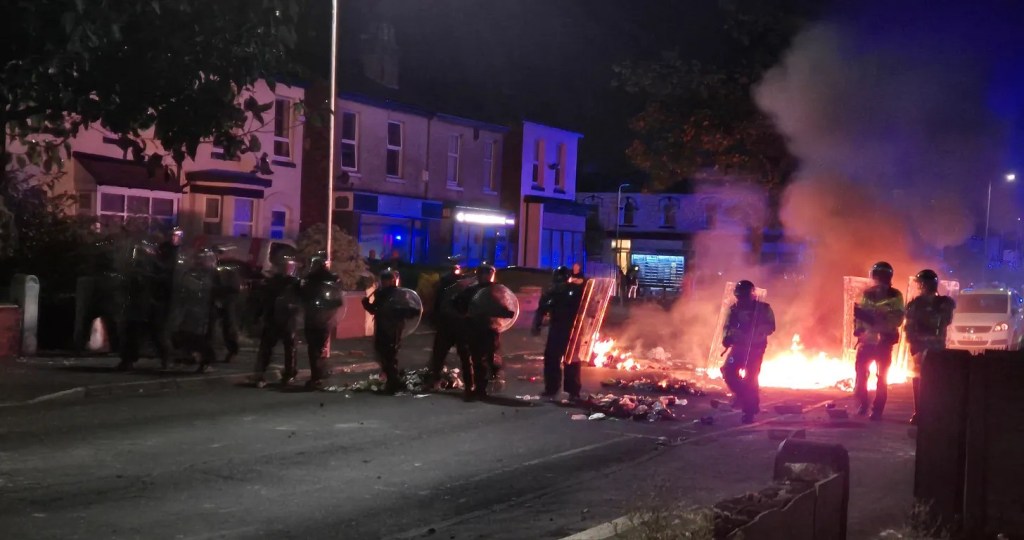
Three young girls from Southport dead, a campaign of misinformation and the hijacking of grief by the far-right.
The riots at the end of July and beginning of August were triggered, at least in some part, by the death of
What followed was targeted and deliberate disinformation spread via social media which took the form of incorrect speculation about the 17-year-old arrested for the crime and escalated to a new MP asking if the truth was being hidden from us (while acknowledging he had no information to suggest that it was).
It was important for news publications to demonstrate responsible behaviour – and for the most part they did. Ahead of 7 August, when most of the UK saw counter protests with little violence taking place, a list of small businesses and charities relating to immigration services was circulated online.
Through our work with The Blackpool Lead and The Lancashire Lead, we opted not to repeat that list of businesses. There was a real and genuine fear that doing so would merely amplify the message and lead to further problematic behaviour. Most news publications opted to go down the same route.
The news cycle moves on and conversations in newsrooms will instead be focused on workers rights, an outdoor smoking ban, prison populations and the Paralympics. But there’s more to be reported on the riots in a constructive way and that tells readers something about who they are as a publication.
The very base level will be to report on the dozens of sentencing hearings happening across the country. Actually attending these in court is proving to be somewhat problematic – as dates are shifting and it’s not the role of a police press office to keep journalists updated on those changes – but the results are being shared and are straightforward to report.
There are other questions to ask which demonstrate how in touch with an area a publication is:
Every organisation will have seen the phrase ‘two-tier policing’ in their comments over the past month – is this something that can be dispelled with authority?
The phrase far-right has been used in relation to the riots – with justification – but what makes an area susceptible to the messages of the far-right which mostly spread online? And is it fair to describe everyone present in the riots as far-right?
Why are areas that experience the worst levels of deprivation more likely to see disorder?
Given islamophobia was such a clear, if misguided, cause of the riots, what stories can we tell to help foster understanding of different communities?
Why if the behaviour was cited as being carried out by people outside of communities?
This month on The Blackpool Lead we tried to look a little bit deeper into why this happened in a town that has historically relied on people travelling there to spend money – and found the answers to be complicated.
A mix of deprivation, government rhetoric, poorly regulated platforms were all cited – along with the nuance of the fact that linking these issues directly to people’s behaviours is fraught with risk.
Moving forward, we want to look at the positives about how communities have responded – and how Muslim communities in particular have been affected by what’s happened.
Everyone was affected in some way, big or small, by what happened and how news providers answer the questions they left behind – or whether they elect to move forwards instead – will tell readers a lot about them.
 Alma
Alma 